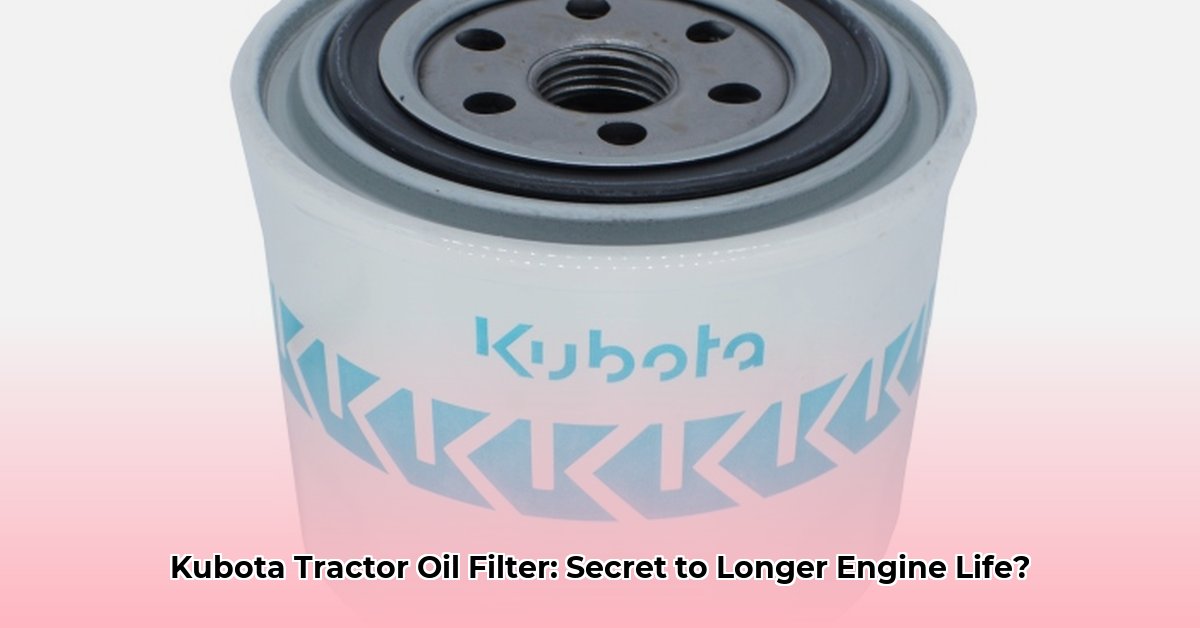
Maintaining your Kubota tractor's peak performance demands regular maintenance, and choosing the right oil filter is a critical component often overlooked. This guide will equip you with the knowledge to select, install, and responsibly dispose of oil filters, maximizing your tractor's lifespan while minimizing your environmental impact. We'll demystify the process, making it accessible even for those without extensive mechanical experience. For more detailed information on Kubota oil types, see this helpful guide: Kubota Oil Guide.
Understanding Kubota Oil Filters: Types and Specifications
Kubota tractor oil filters aren't all created equal. Understanding their varying types is crucial for making an informed decision. Think of your oil filter as the engine's first line of defense, safeguarding it from damaging particulates. The choice affects both engine health and environmental sustainability.
Filter Types: A Comparison
Several types of oil filters cater to different needs and budgets. Each possesses unique advantages and disadvantages, impacting both performance and environmental considerations.
| Filter Type | Advantages | Disadvantages | Environmental Impact |
|---|---|---|---|
| Standard Paper | Affordable, widely available, easy to install. | Shorter lifespan, may not filter as efficiently. | Moderate (paper production and disposal). |
| Synthetic | Longer lifespan, superior filtration, enhanced engine protection. | Higher initial cost. | Higher (synthetic material production and disposal), but increased longevity offsets some impact. |
| Bio-based (if available) | Made from renewable resources, potentially biodegradable. | Limited availability, potentially higher cost. | Lower (if truly biodegradable and sustainably sourced), but availability may be a constraint. |
Your Kubota's owner's manual is your ultimate guide. It clearly outlines the specific filter type and part number recommended for your model. Using an incorrect filter can severely damage your engine. Never compromise on this crucial step!
Choosing the Right Filter: A Balanced Approach
While your owner's manual provides essential information, making the best choice necessitates considering additional factors. A balanced approach encompasses price, performance, and environmental responsibility.
Price vs. Performance: While a cheaper filter may seem tempting, consider the long-term cost. A higher-quality filter with a longer lifespan might reduce replacement frequency, potentially saving you money over time. This is especially true given the potential for significant repair costs associated with engine damage from inadequate filtration.
Environmental Impact: Evaluate the filter's entire life cycle. Are the materials from renewable resources? Is the manufacturer committed to sustainable practices? Opting for an eco-friendly filter aligns with environmentally conscious farming practices, an increasingly important consideration.
Transparency Matters: Unfortunately, Kubota's detailed information on filter composition is often lacking. Increased transparency from manufacturers and retailers is essential for enabling informed consumer decisions. Demand greater clarity from your suppliers.
Installing and Replacing Your Kubota Oil Filter: A Step-by-Step Guide
Replacing an oil filter is a relatively straightforward process, but safety precautions are paramount. Always refer to your owner's manual for model-specific instructions. Improper installation can lead to leaks and engine damage.
Preparation: Consult your manual; ensure the engine is off and cool. Hot oil can cause severe burns.
Safety First: Position a drain pan to collect used oil, preventing spills and facilitating cleanup.
Removal: Use the appropriate wrench to carefully loosen the old filter. Expect some oil spillage.
Installation: Lightly lubricate the new filter's rubber gasket with fresh oil. This ensures a secure seal, preventing leaks. Screw on the new filter by hand until snug. Avoid over-tightening.
Verification: Check for leaks after installation.
Responsible Disposal and Recycling: Minimizing Your Environmental Footprint
Used oil filters pose a significant environmental hazard. Avoid discarding them in regular trash.
Local Recycling: Explore local recycling programs for used oil filters. Many communities offer such services.
Kubota Initiatives: Inquire with your Kubota dealer or service center about potential take-back programs for used filters.
Hazardous Waste Disposal: If recycling isn't readily available, adhere to local regulations for disposing of hazardous waste.
Long-Term Sustainability: A Holistic View
When choosing a Kubota oil filter, adopt a holistic perspective, considering the entire life cycle—from manufacturing to disposal. Factor in the environmental impact alongside cost. Prioritizing sustainability reduces your environmental footprint, contributing to a healthier planet and more responsible farming practices. Demand environmentally responsible practices from manufacturers. Support companies committed to sustainable solutions.
Key Takeaways:
- Selecting the appropriate Kubota oil filter is paramount for engine health and longevity.
- Responsible disposal and recycling of used filters are environmentally crucial.
- Understanding Kubota's commitment to sustainability influences informed purchasing decisions.
- The optimal filter choice balances cost, performance, and environmental impact.
- Proper installation and maintenance are vital to prevent leaks and engine damage.